Driveway Pressure Washing Tips for Ballina Homeowners
Ballina’s humid coastal conditions can encourage algae and mould on shaded driveways, leaving surfaces slippery and discoloured. Pressure washing can improve their appearance and grip, but the wrong technique can damage concrete, loosen paving joints or send polluted water into stormwater drains. A little preparation makes the job safer and more effective.
Check Your Driveway Before Cleaning
Inspect the surface for cracks, loose aggregate, crumbling concrete and damaged joints. Pressure washing can worsen existing defects, so repair unstable areas before cleaning. Sweep away sand, leaves and grit, move vehicles, and protect nearby electrical fittings.
Match the cleaning method to the material. Sound, unsealed concrete generally tolerates more pressure than decorative finishes, asphalt or weathered pavers. For coloured, stamped or sealed concrete, follow the installer’s or coating manufacturer’s instructions. Newly poured concrete needs sufficient curing time before pressure cleaning.
Use Controlled Pressure and Consistent Technique
- Test an inconspicuous patch. Start with the lowest effective pressure and check for surface roughening, colour changes or sealer damage.
- Choose a wide fan nozzle. Avoid pinpoint jets, which can etch concrete and gouge softer surfaces. Begin around 30–45 centimetres from the surface, adjusting according to the equipment instructions and test results.
- Keep the nozzle moving. Work in overlapping passes at a consistent distance. Do not concentrate the spray on cracks, edges or paving joints.
- Consider a compatible surface cleaner. On suitable, sound concrete, this attachment can produce a more even result and reduce splash compared with a wand alone.
Wear enclosed, slip-resistant footwear and eye protection, and keep children and pets away. Never direct the jet at skin, and never operate a petrol-powered pressure washer in a garage or other enclosed area.

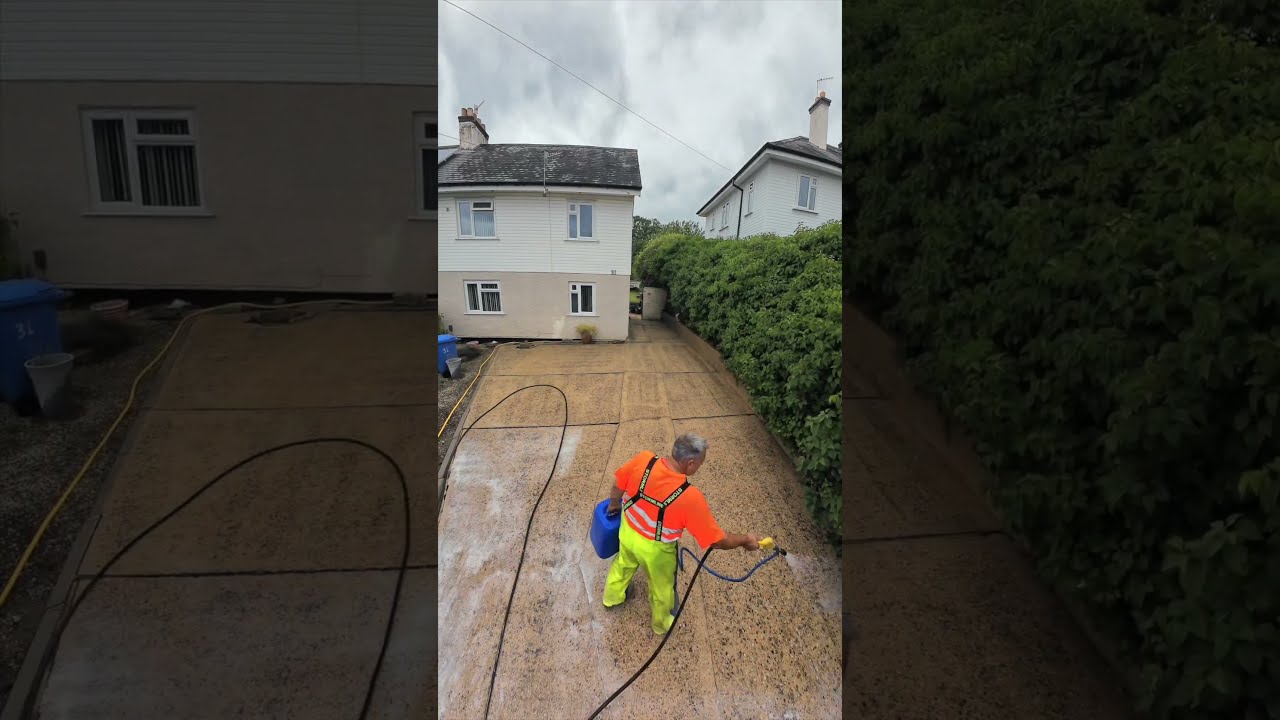

Treat Stains Without Damaging the Surface
Pressure alone may not remove oil, rust or embedded organic growth. Absorb fresh oil first, then use a cleaner labelled for both the stain and driveway material. Follow the specified dilution and dwell time, and do not let the product dry on the surface.
Never mix cleaning chemicals. In particular, bleach must not be combined with acids or ammonia. Avoid improvised acid treatments, which can permanently alter concrete and damage nearby plants or metalwork.
Keep Wash Water Out of Stormwater
Ballina’s drains connect to local waterways, so plan runoff control before starting. Do not allow detergent, oil, sediment or contaminated wash water to enter street gutters or stormwater drains. Sweep up debris first, then use suitable containment and recovery equipment where needed.
Check current Ballina Shire Council guidance on wash-water disposal and any water restrictions before using a pressure washer. A product labelled biodegradable is not automatically safe to discharge into stormwater.
Choose the Right Weather and Maintenance Routine
Pick a mild day without strong wind or forecast heavy rain. Hot surfaces can dry cleaning solutions too quickly, while rain can spread untreated runoff. Allow https://pressurecleaningballina.com.au/gutter-cleaning/ the driveway to dry fully before assessing the result or applying any compatible sealer.
Inspect shaded sections regularly and clean when growth or staining develops rather than relying on an inflexible schedule. For steep driveways, delicate finishes, extensive oil contamination or difficult runoff containment, use a professional who can explain their surface-testing and wastewater-management methods.
Ballina Pressure Cleaning
0440 133 837
Corrections
Spot something wrong? Send it to the desk and it gets fixed in the open.